

Microporous
Interconnected spaces between the building blocks provide pathways for cellular infiltration.
MAP™ technology is based on a scaffold’s physical microenvironment and is compatible with any material chemistry, providing the foundation for Tempo’s minimally invasive, fully synthetic, precision-engineered tissue scaffolds.
Hydrogel microparticles are delivered through a syringe. In the wound they link together into a stable scaffold with open pores between them.
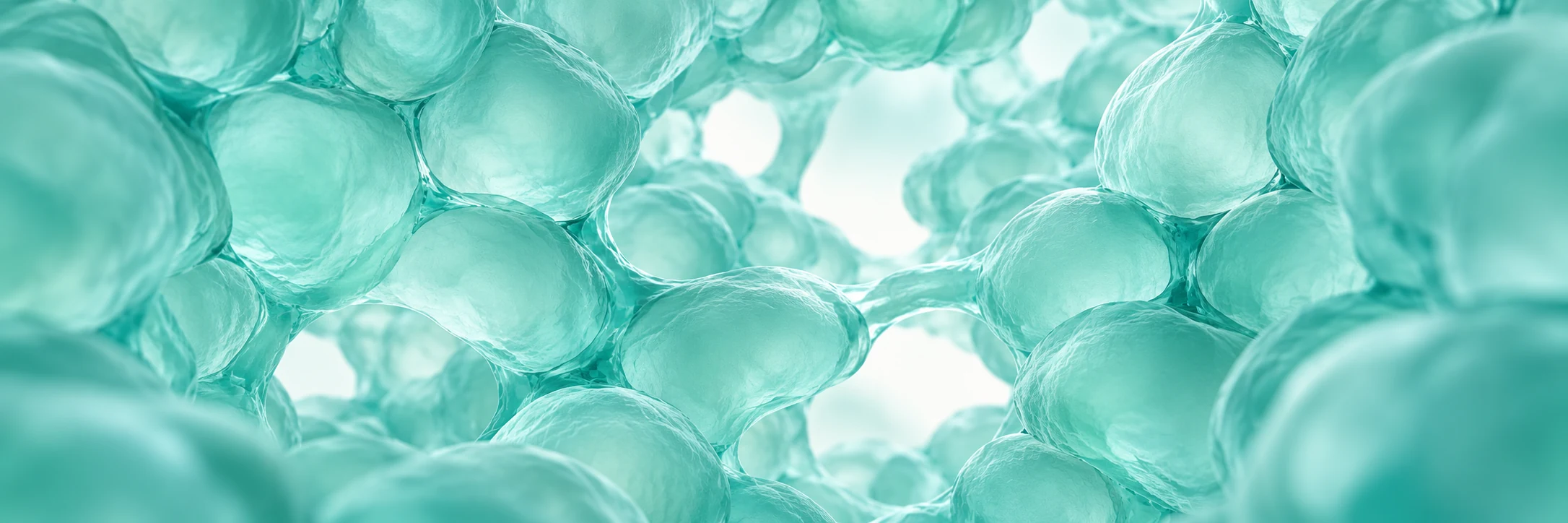
Interconnected spaces between the building blocks provide pathways for cellular infiltration.

Individual microgels link together after placement to create a coherent porous scaffold.
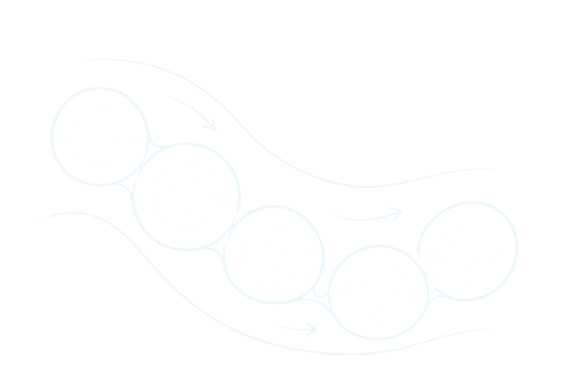
Flowable microgel building blocks can conform to irregular spaces prior to assembly.
A sequential view of the MAP™ material concept, from syringe delivery to tissue infiltration. View Tempo’s original technology overview ↗
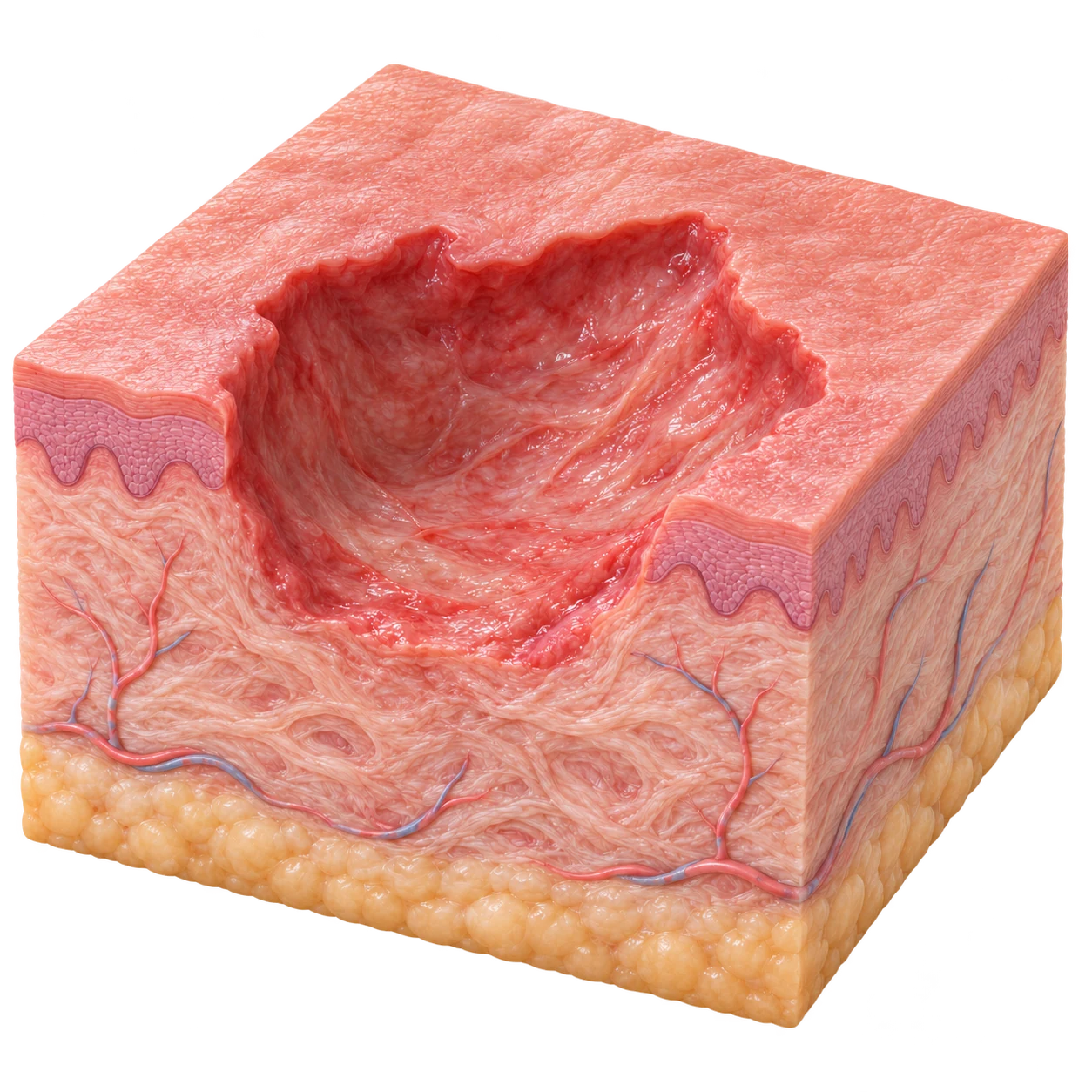
An irregular wound volume requires a material that can adapt to the defect.
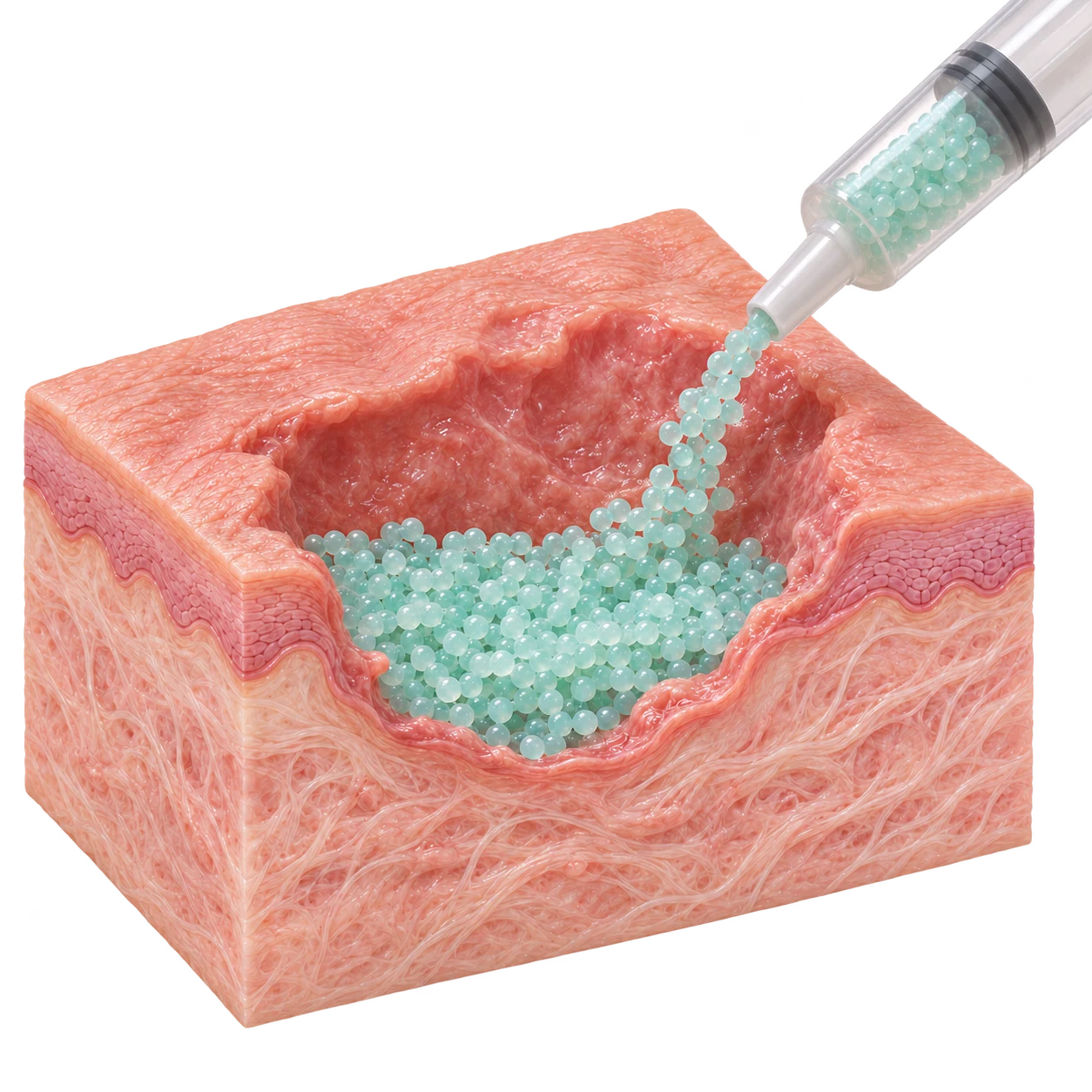
Flowable MAP™ building blocks are delivered directly into the wound bed.
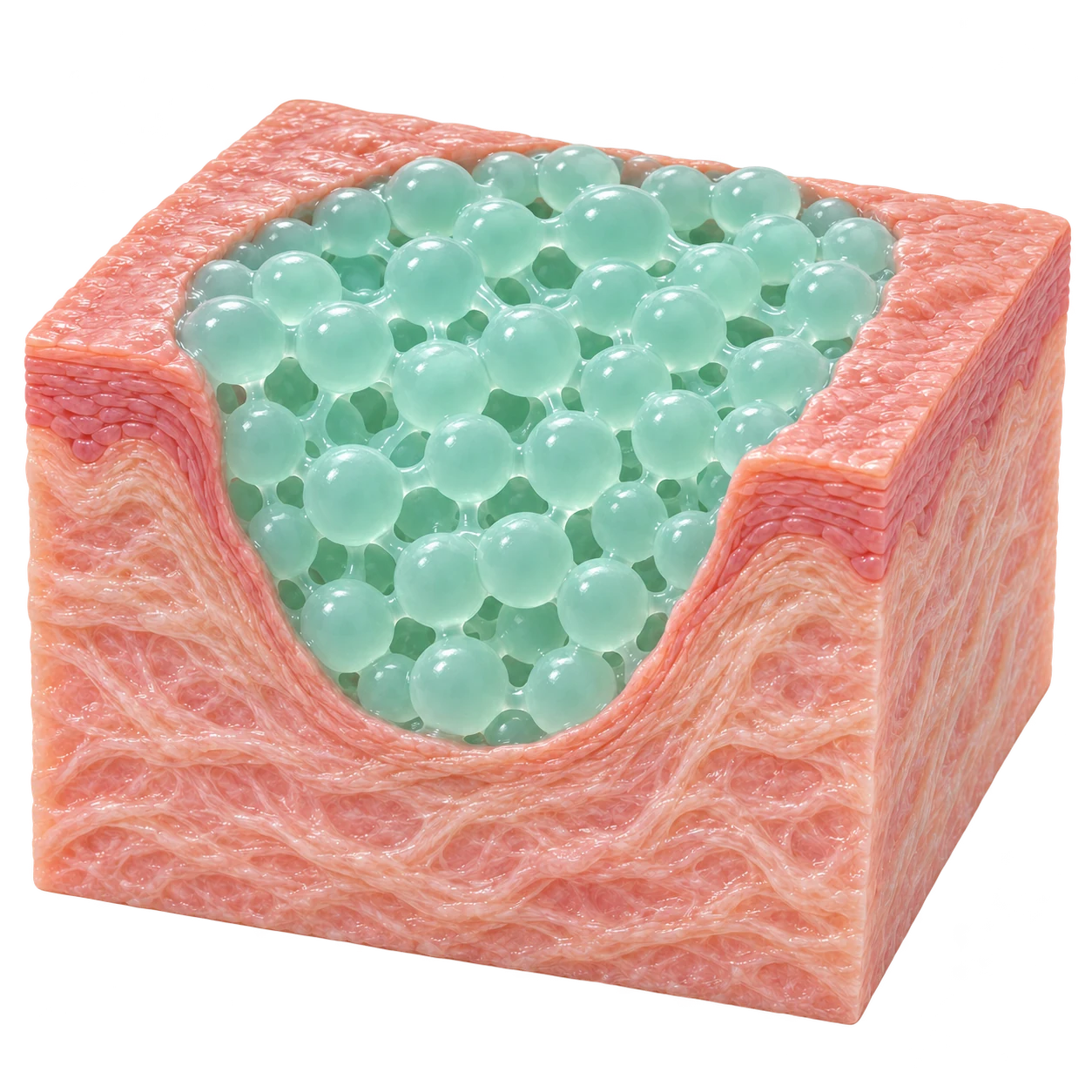
The microparticles connect and create a stable scaffold while maintaining open porosity.
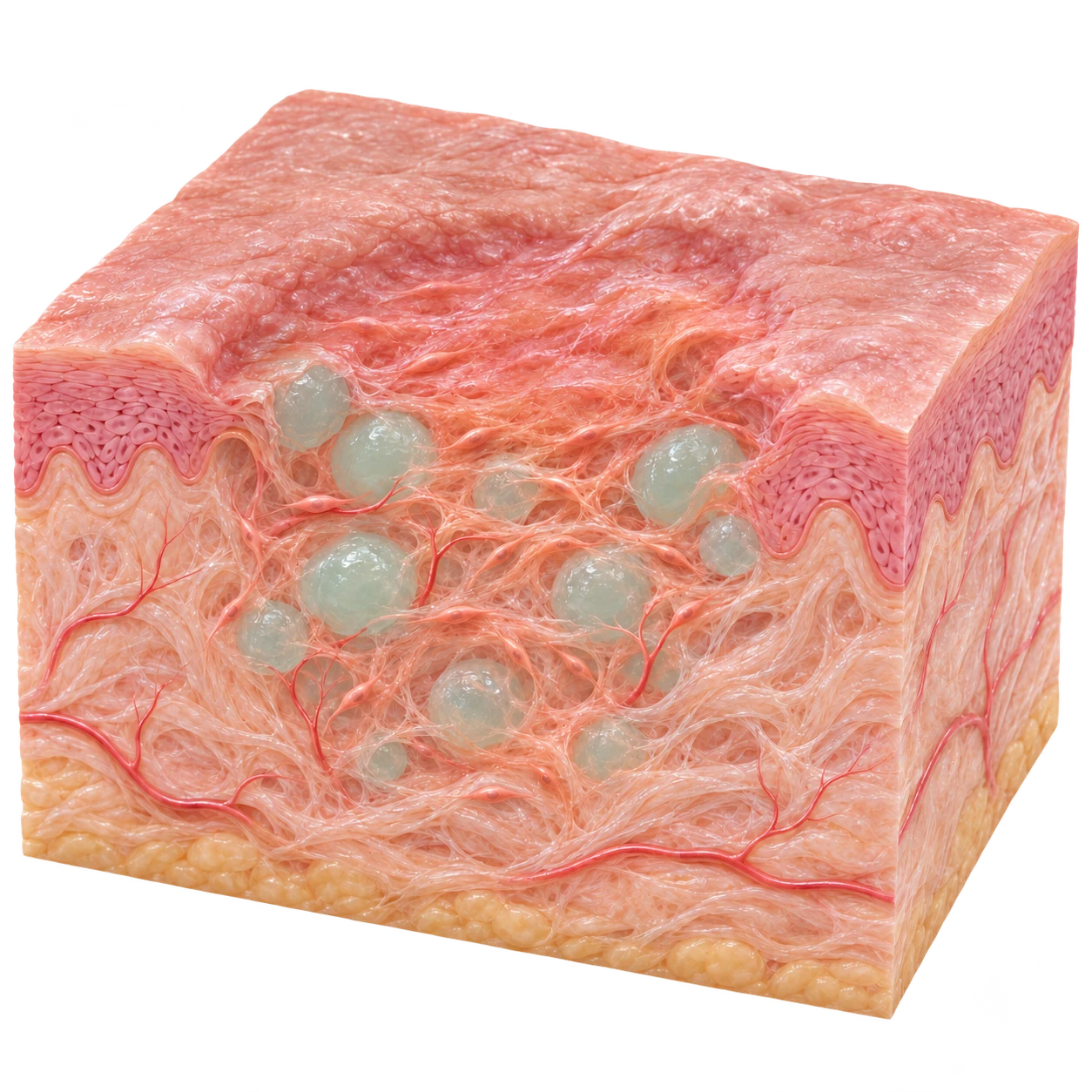
Host cells can infiltrate the pores as tissue regenerates and the scaffold resorbs.
Tempo’s lead asset, TT101, is a stand-alone material with no cells or biological factors. The wider MAP™ platform can be adjusted and combined.
No cells or biological factors in TT101.
Gradually replaced by the patient’s own tissue.
Stiffness and durability can be adjusted, from weeks to years.
Can be paired with controlled release of small molecules and with stem cells.
MAP™ was first described by Tempo’s founders in Nature Materials in 2015, a paper cited more than 1,500 times. More than 200 papers have since been published on the technology, and Tempo holds 23 issued patents across 7 patent families.